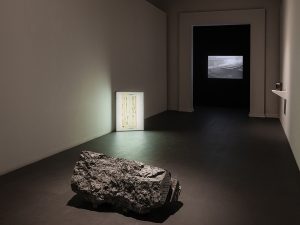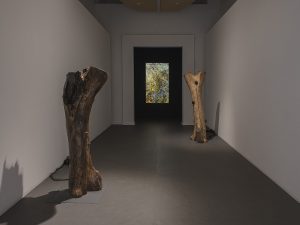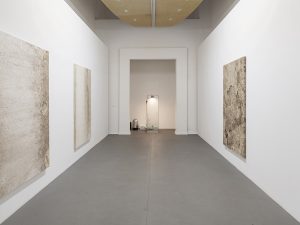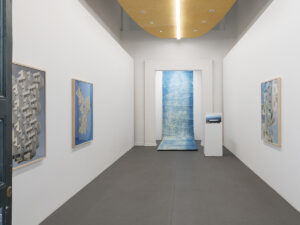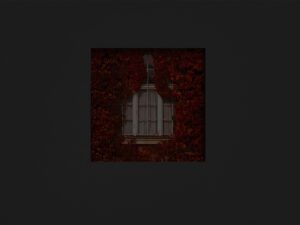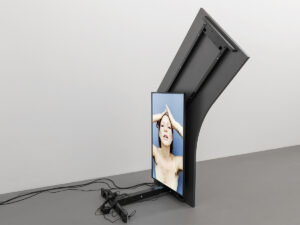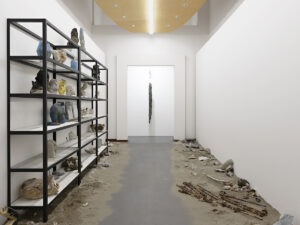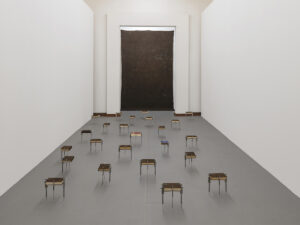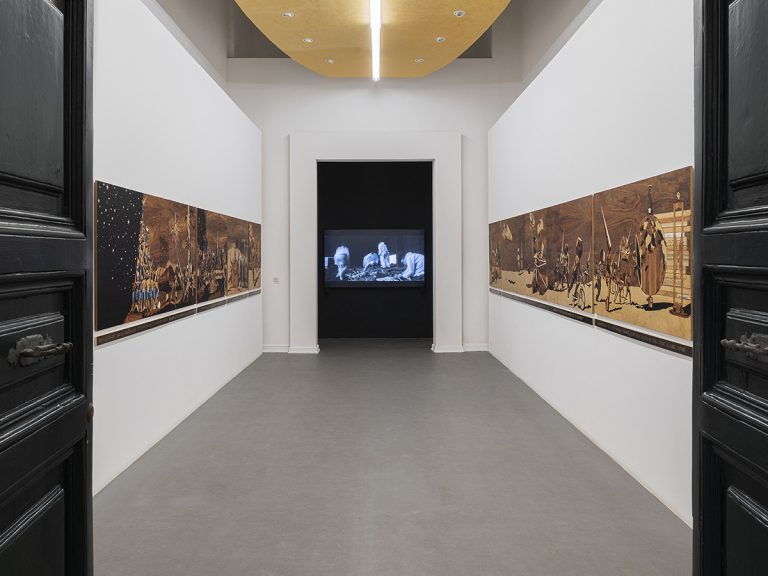
The ninth exhibition of Paesaggio, (26 January – 17 March 2024), is dedicated to Romeo Castellucci (Cesena, 1960) and Andrea Mastrovoito (Bergamo, 1978) and it is introduced by an essay by Nicolas Martino intitled “Res gestae. The Tragic Feeling of History in 21st Century Italian Art”. The essay can be read by clickin here.
If Greek tragedy represents the aesthetic and political foundation of Western culture, it is interesting to note how tragic representation has forcefully re-emerged in the contemporary arts scene just as we are experiencing the ruins of what even not so long ago we called History with a capital H.
Nicolas Martino reflects on the persistence of the tragic feeling of history in 21st century Italian art, focusing in particular on the work of Romeo Castellucci and Andrea Mastrovito.
Résurrection (2022) by Romeo Castellucci is a modern tragedy that unfolds to the notes of Gustav Mahler’s symphony of the same name. It is a total work that interrogates the possibility of conceiving a hypothetical and cathartic renewal on the rubble of a world dominated by violence, which the director renders in the discovery of lifeless bodies in a muddy mass grave, dug up with religious care throught almost the entire theatrical action.
Le jardin des histoires du monde (2018) is a long frieze created by Andrea Mastrovito according to the Bergamo tradition of marquetry. The tale, almost an epic poem, is set outside of any precise time and space, allowing for an immediate association with the endless historical repetitions of the errors that humanity proves unable to amend.
Paesaggio is one of the two exhibition cycles of the program Quotidiana at the Museo di Roma – Palazzo Braschi conceived and produced by La Quadriennale di Roma in collaboration with City of Rome, Department of Culture – Superintendency for Cultural Heritage. Its aim is to explore a number of significant trends in 21st-century Italian art.
Every two months, curators (Italian and foreign) reflect on artistic trajectories of particular interest through a critical text and an exhibition of a few essential works.
The exhibition venue is the Museo di Roma-Palazzo Braschi (Piazza di San Pantaleo, 10/Piazza Navona, 2). The admission is free without reservation. Opening hours: from Tuesday to Sunday 10.00 – 19.00