The ArBiQ

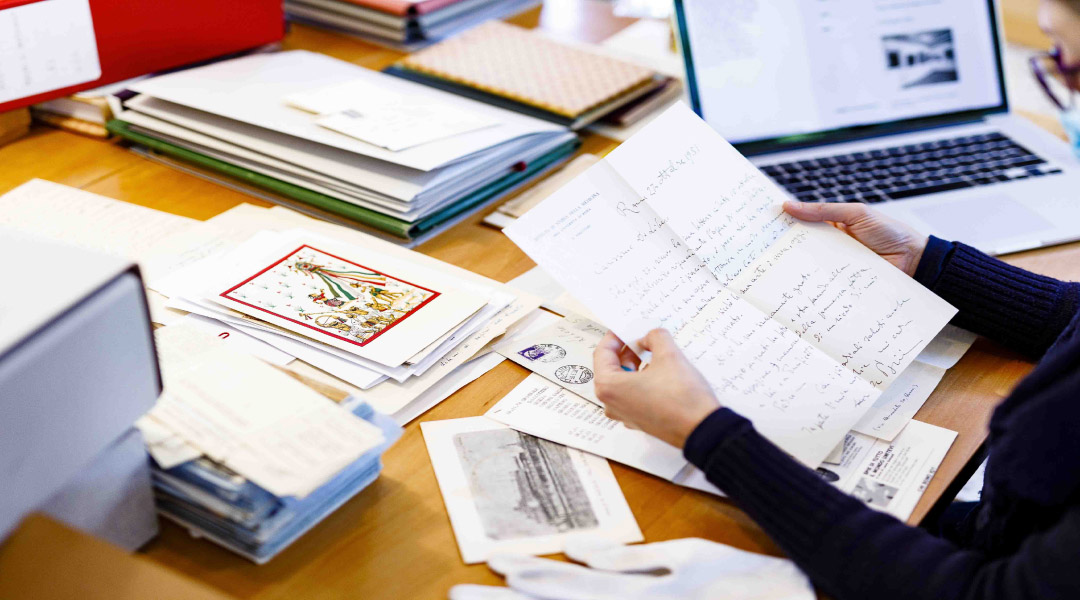
The Quadriennale Archive Library (Archivio Biblioteca della Quadriennale, ArBiQ) is the Foundation’s department dedicated to the conservation, cataloguing and study of sources on 20th- and 21st-century visual arts. It safeguards the documentary funds conserved by enabling public consultation, expands the collection through purchases and donations, and encourages contacts with scholars and institutions for research projects.
The establishment of the Archive Library began in 1998, when compilation of the inventory of the funds began. The new documentation centre was opened to the public in 2000, while all the archive materials were declared of considerable historical interest by the Italian Ministry of Culture the following year. Since 2003, the first private and personal archival and book funds have been acquired by donation.
An online database is available for research purposes, which enables the integrated consultation of the archival funds inventoried to date. The library catalogue can be accessed online through the National Library Service (Servizio Bibliotecario Nazionale, SBN), which the Institution has joined through the Rome Cultural Institutes hub.

Archive

The archival collection of the Quadriennale is closely connected to the promotion of 20th- and 21st-century Italian visual arts carried out by the Institution since the 1930s. The archival funds conserved include the large core of historical papers of the Quadriennale (1927-2000) and the over 15,000 continuously updated documentation files on Italian artists ranging from the 20th century to the latest generations.
In recent years, 12 additional funds donated by private individuals in the form of artists, art historians and gallery owners’ archives have been added to the Quadriennale’s two documentary cores.
For research purposes, an online database is available which enables the integrated consultation of the archival funds inventoried to date.

Library

The Quadriennale’s library specialises in modern and contemporary Italian art. The library’s bibliographic material is continually updated, and now numbers around 50,000 volumes from the Institution’s own collection and the 8 special funds acquired through donations since 2005. The Quadriennale’s entire book heritage is catalogued and accessible online through the National Library Service (SBN), which the Institution has joined through the Rome Cultural Institutes hub.

publications - monographs

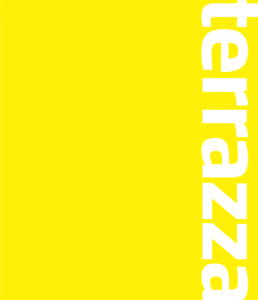
Terrazza
artisti storie luoghi in Italia negli anni zero

by Laura Barreca, Andrea Lissoni, Luca Lo Pinto, Costanza Paissan
Marsilio Editori, Venice 2014
496 pp, 500 illustrations in b/w

The first atlas of young art in Italy after the year 2000: the most dynamic cultural realities and emerging artists. A wealth of information and immages, with accompanying texts by four new-generation curators. An investigation into where Italian art is going.

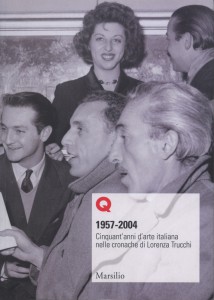
1957-2004
cinquant’anni d’arte italiana nelle cronache di lorenza trucchi

with an introductory text by Marco Tonelli
Marsilio, Venezia 2009
208 pp, 30 illustrations in b/w

A selection of seventy-two articles from more than one thousand five hundred pieces written by Lorenza Trucchi for newspapers, weekly publications, magazines and exhibition catalogues between 1949 and 2007, in which the wonderful quality of Trucchi’s prose guides the reader through the history of 20th-century Italian art. The result is not just a record of works of art and the lives of the artists themselves, but also and above all a tale of strategies, concepts and exhibition practices.

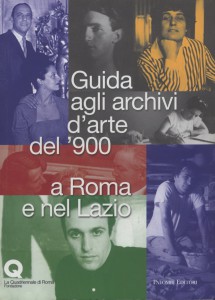
Guida agli archivi d’arte del ’900 a Roma e nel Lazio

introductory text by Gino Agnese, methodological note by Assunta Porciani
Palombi editori, Rome 2009
320 pp, 134 b/w illustrations

A first, fundamental survey of 20th-century archives on artists, historians and critics, galleries, foundations, artistic and cultural associations, held by private individuals and public institutions in Rome and Lazio.

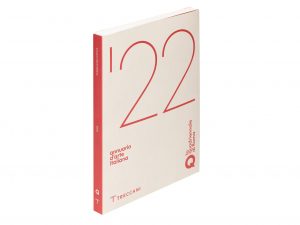
Annuario d'arte italiana 2022

Edited by Treccani, the aim of this book is to offer a critical overview of the artworks produced in Italy in 2022, providing a detailed scenario as well as a snapshot of the characteristics of Italian art production in this particular season. Its most important section is a collection of critical articles taken from press reviews throughout the calendar year about the activities undertaken by Italian artists and curators. Another section, instead, comprises six essays, through which we can navigate our way through the vast ocean of the compilation section. The essays are written by by Raffaella Perna – head of the entire project – Gian Maria Tosatti, artistic director of the Foundation, and Davide Ferri, Marcello Francolini, Nicolas Martino, and Chiara Pirozzi.


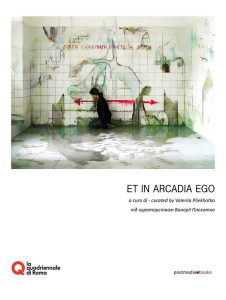
Et in Arcadia ego

Curated by Valeriia Pliekhotko
postmedia books 2024, 
176 pp, texts in Italian, English and Ukrainian.

Et in Arcadia Ego was a residency for Ukrainian artists in dialogue with Italian artists organized by La Quadriennale di Roma at the invitation of the Ministry of Culture and realized with the support of this same ministry, as well as Lazio Region, the Fondazione di Sardegna, and IED Cagliari. The residency took place in the Santa Severa castle and in the former Manifattura Tabacchi in Cagliari, places united by their overlooking the sea, which also laps for a long part the southern border of Ukraine, at the center of strong tensions in these years of war. And it is precisely from the tension between suffering and salvation, between war and remoteness, that the title of the residency emerged, Et in Arcadia Ego, whose final outcome is the present catalog, which is also a diary.texts in Italian, English and Ukrainian.

publications - Quaderni d'arte italiana

Quaderni d’arte italiana is a quarterly journal that aims at providing a space for investigation and reflection on 21st-century Italian art and its relations with the various Italian and international cultural and socio-political scenes.
The magazine, which is published by Treccani and is available in Italian and English, adopts an analytical approach that seeks to problematise contemporary creation by conceiving it as a privileged tool for reading the present.
The editor-in-chief of the magazine is Gian Maria Tosatti. The editorial board is composed of: Nicolas Ballario, Francesca Guerisoli, Nicolas Martino, Attilio Scarpellini and Andrea Viliani. The production of the magazine sees the involvement of the curators who collaborate in the various activities of the Quadriennale and external authors.

publications - scholarships

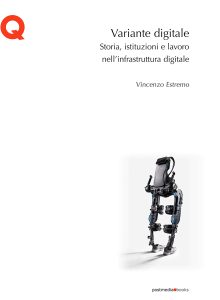
Variante digitale
storia, istituzioni e lavoro nell'infrastruttura digitale

Vincenzo Estremo
postmedia books, 2024
136 pp, 15 illustrations


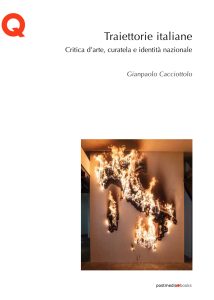
Traiettorie italiane
critica d'arte, curatela e identità nazionale

Giampaolo Cacciottolo
postmedia books 2024
196 pp


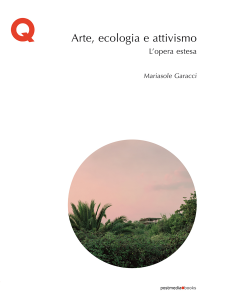
Arte, ecologia, attivismo
l'opera estesa.

Mariasole Garacci
postmedia books 2025
146 pp, 32 illustrations

publications - Quaderni della Quadriennale

Founded in the early 1950s by Fortunato Bellonzi and Antonio Baldini, this series has made a fundamental contribution to our knowledge of certain periods and movements in Italian art, as well as of individual artists. Publication ceased in 1963 and later started again, under Bellonzi and Francesco Franceschini, for just two issues (1968, 1974), before being resumed in 2004 with a new series

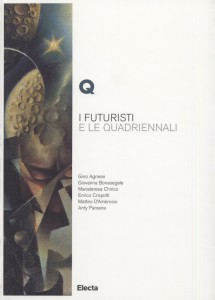
I futuristi e le Quadriennali

Gino Agnese – Giovanna Bonasegale – Mariateresa Chirico – Enrico Crispolti – Matteo D’Ambrosio – Anty Pansera
n.s./5, Electa, Milano 2008, 216 pp., 375 illustrations in b/w, 30 color plates

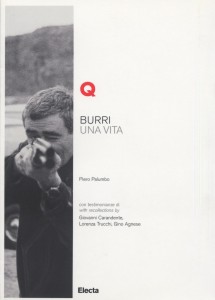
Burri. Una vita

Piero Palumbo
with testimonials from Giovanni Carandente, Lorenza Trucchi, Gino Agnese
n.s./4, Electa, Milano 2007, 208 pp., 86 b/w illustrations, 4 b/w and 15 color plates, English abstract

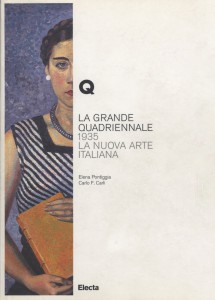
La grande Quadriennale.
1935, la nuova arte italiana

Elena Pontiggia – Carlo Fabrizio Carli
n.s./3, Electa, Milano 2006, 276 pp., 259 illustrations and 46 b/w plates, english abstract 

publications - Contemporary Art Archive

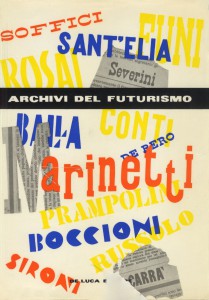
This series has represented a new model for organizing existing documents on some of the main art movements in Italy between the 19th and 20th century. It was created at the end of the 1950s by a committee comprised of Giulio Carlo Argan, Giorgio Bacchetti, Fortunato Bellonzi, Enzo Carli, Giorgio Castelfranco, Guglielmo De Angelis D’Ossat, Enzo Francia, Emilio Lavagnino, Marco Valsecchi and Lionello Venturi. In 2009, the Archivi del Futurismo, to mark one hundred years since the birth of the movement, were the object of a new updated and extended edition, with the first volume being published at the end of 2010.

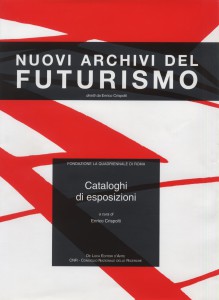
Nuovi Archivi del Futurismo. Cataloghi di esposizioni

curated by di Enrico Crispolti

De Luca Editori d’arte – CNR Consiglio Nazionale delle Ricerche, Roma 2010
840 pp, 5.250 b/w illustrations, Italian/English

Archivi del Futurismo

Collected and arranged by Maria Drudi Gambillo and Teresa Fiori

volume one
De Luca Editori in Roma,
Roma 1958, 620 pp.
8 b/w illustrations 

volume two
De Luca Editori in Roma,
Roma 1962, 530 pp.
1456 b/w and 18 color illustrations

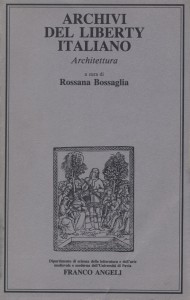
Archivi del Liberty italiano. Architettura

curated by Rossana Bossaglia

Franco Angeli Libri, Milano 1987
608 pp., 100 b/w illustrations

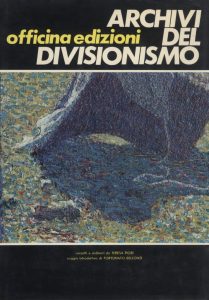
Archivi del Divisionismo

collected and arranged by Teresa Fiori
Introductory essay by Fortunato Bellonzi

volume one
Officina Edizioni, Rome 1968,
558 pp, 48 b/w illustrations

volume two
Officina Edizioni, Roma 1968
242 pp, 2767 b/w illustrations, 8 color plates

publications - other

The first task of an institution dedicated to the study and analysis of Italian contemporary art is to build its own field of investigation. Panorama is a project that monitored our country’s art scene through a daily study visit by a group of curators evenly distributed throughout the country. Every day, on the Quadriennale website, the critical presentation of an artist was proposed based on the observation of his or her work. About thirty studio visits per month were distributed evenly among Northern, Central and Southern Italy, with the aim of representing the full range of territorial scenes within a national horizon. Beginning in 2023, there was a desire to return to the studios of some artists whose work, in the judgment of the curators, seemed important to investigate.

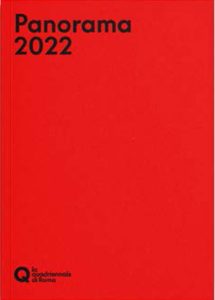
Panorama 2022

Paper collection of study visits conducted during 2022 by curators nationwide and published online daily. The collection is intended for libraries.

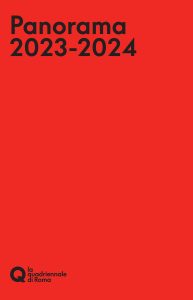
Panorama 2023 - 2024

Paper collection of study visits conducted from March 2023 to August 2024 by curators nationwide and published online daily. The collection is intended for libraries.

info

opening hours

monday – wednesday 10.30-13.30/14.30-17.30
No appointment required

address

Villa Carpegna, Circonvallazione Aurelia 72, 00165 Rome

access

An identity document is required for access. 

support

The Archive Library has a consultation room where a free research guidance service is available. A document reproduction service is available for a fee.

regulations and forms

for regulations and forms, see the Archive Library website

– Code of conduct (file pdf)
– Privacy policy