
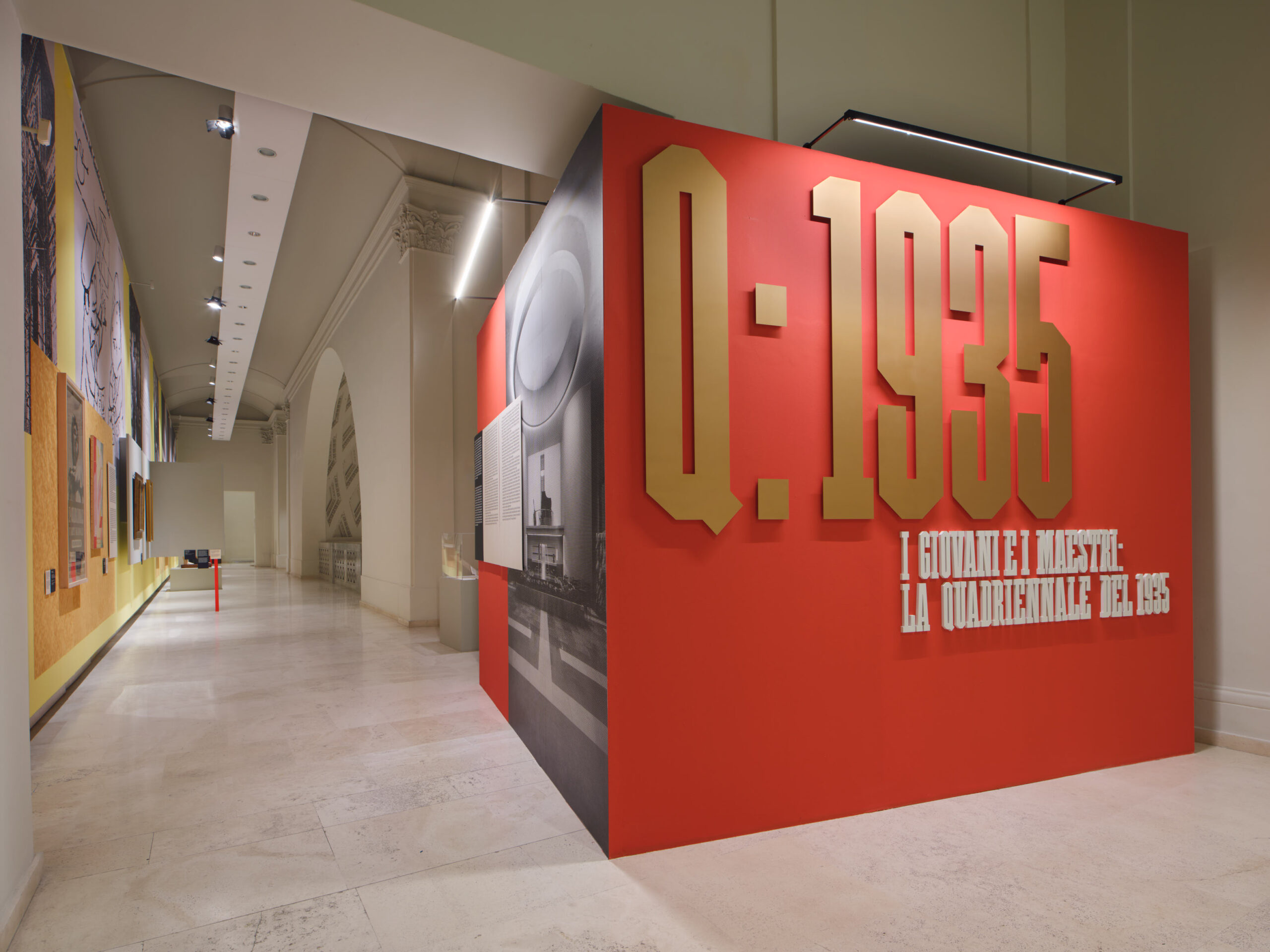
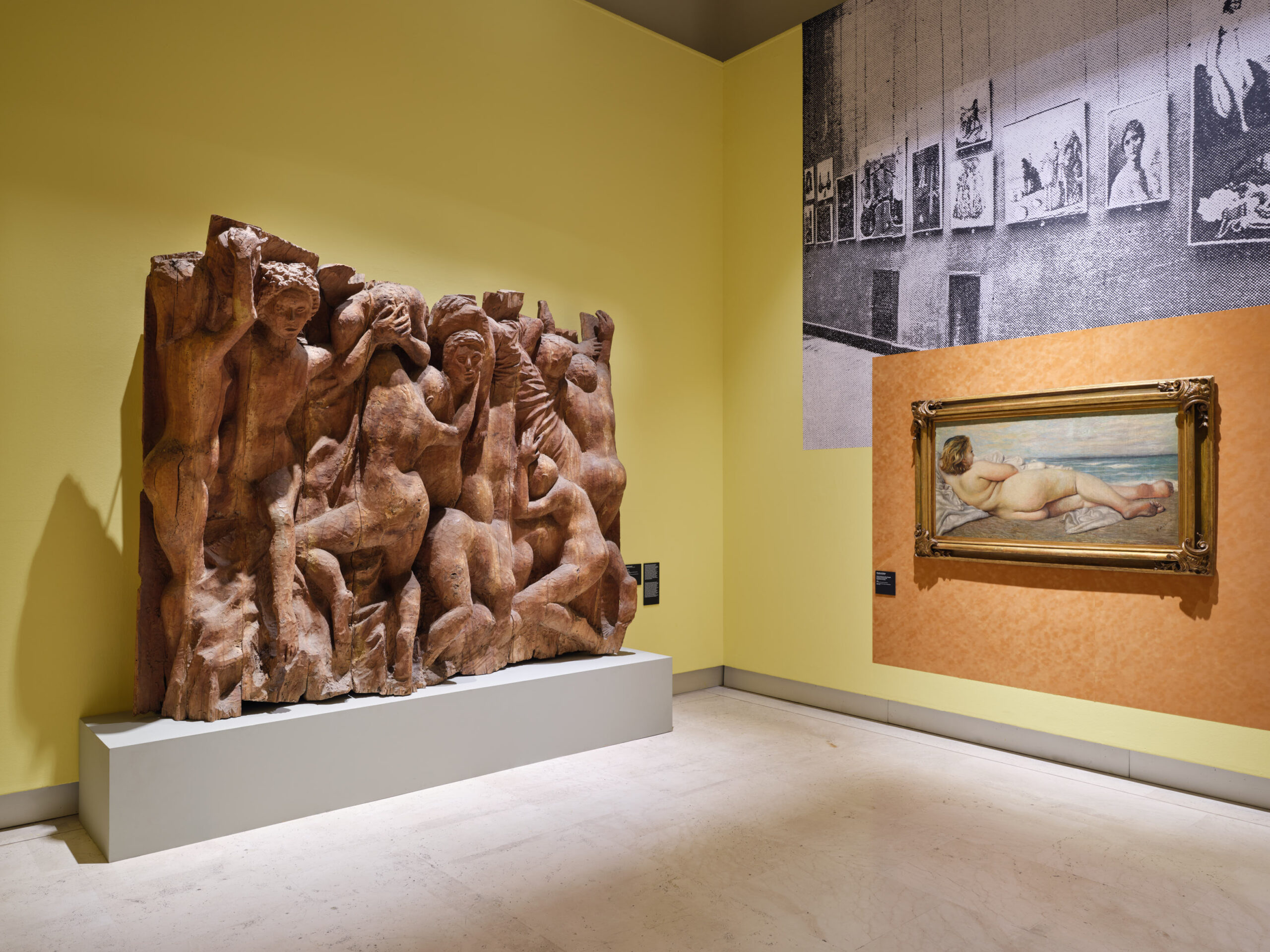


curated by di Walter Guadagnini in collaboration with The Quadriennale Archive Library
1,761 works by over 700 artists displayed across 62 rooms, 19 of which hosted solo exhibitions; 36 prizes awarded, totalling 500,000 lire; 446 works sold for a combined sum of 1,042,000 lire, often to public institutions; over 300,000 visitors; and a 257-page catalogue printed in 4,000 copies. These are just some of the truly remarkable figures associated with the 2nd National Art Quadriennale, held from 5 February to 31 July 1935 at Palazzo delle Esposizioni in Rome. The building was cleared in record time following the Mostra della Rivoluzione Fascista (Exhibition of the Fascist revolution), which had occupied the space for two full years. The Honorary President was Giuseppe Bottai, a prominent figure of the regime; the Acting President was Enrico di San Martino Valperga; and the General Secretary—effectively the event’s deus ex machina—was Cipriano Efisio Oppo, a Roman painter, critic, MP, former secretary of the Artists’ Union, and undoubtedly one of the most influential figures in Italian art of those decades.
As the figures and names suggest, this edition of the Quadriennale was far from ordinary; it was a successful attempt to present to the public not only the finest Italian art of the time, but also the diversity of styles and trends that could be found throughout the entire country. Within this framework, several key elements emerge, clearly reflecting Oppo’s specific intentions—which we have attempted to reflect in today’s brief tribute. First, the juxtaposition of the generation of masters—Severini, de Chirico, Martini, Morandi, to name but a few—with the younger generation; the notable presence of artists from the first and, above all, the second Futurist season, which was the group most inclined to propose art with overtly propagandistic aims; the emphasis on the representatives of Roman Tonalism; and the limited representation of the ‘Novecento’ movement’ (disliked by Oppo) on one hand, and the abstractionists—particularly from Milan—on the other, who were not favoured by the artistic establishment.
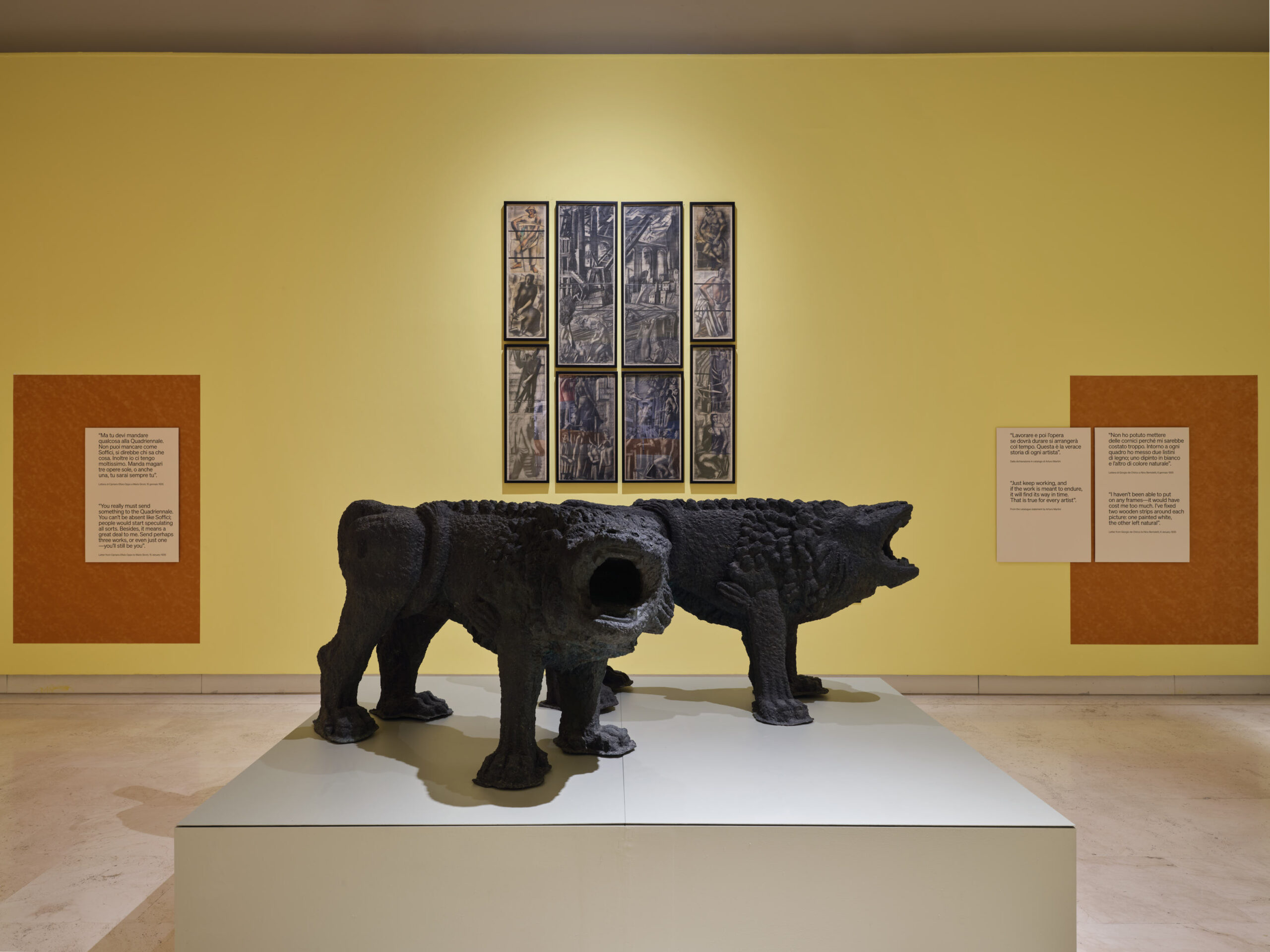
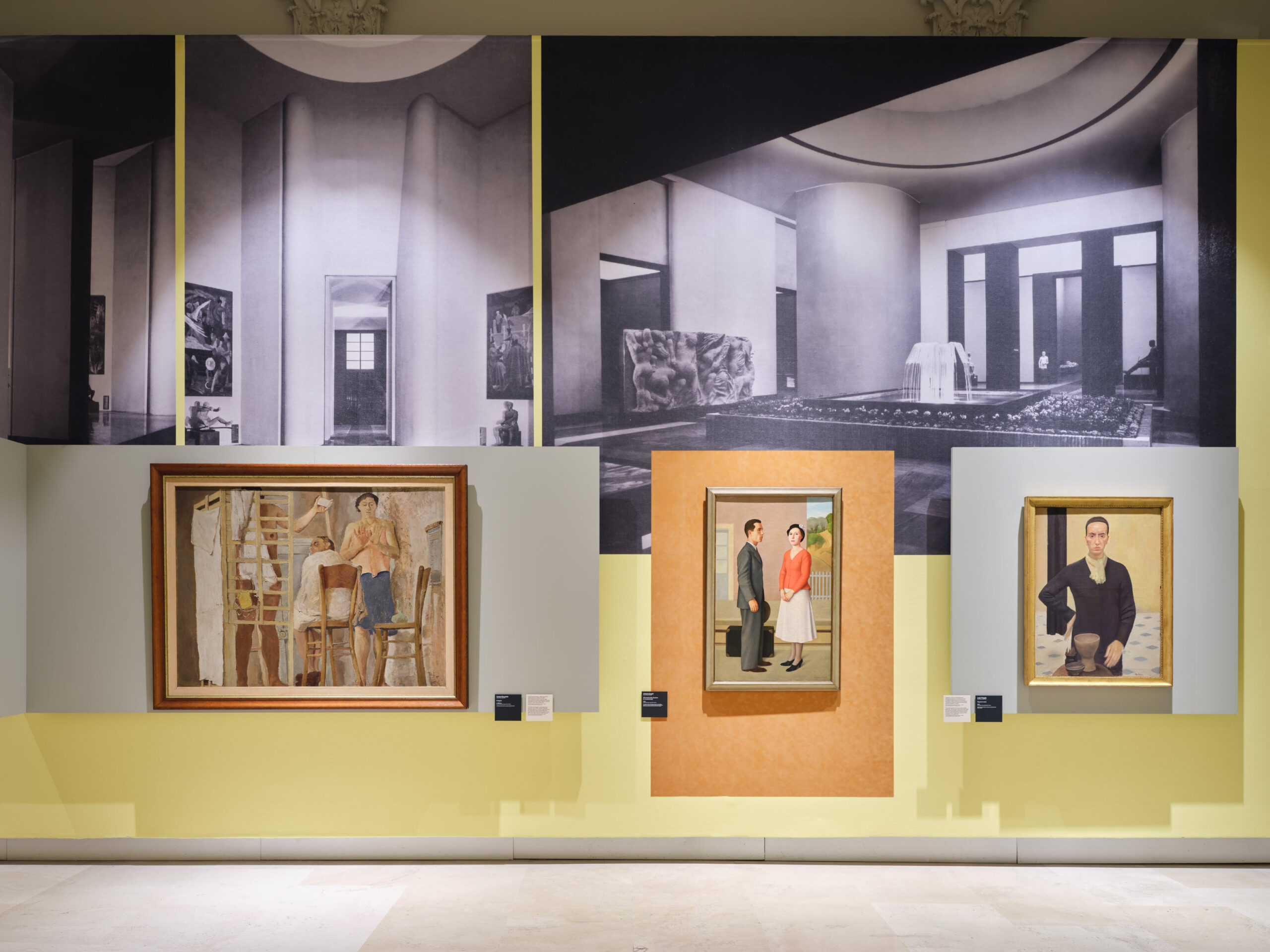
In any case, it was an edition that made history, and some of its echoes are visible in these rooms, entrusted to extraordinary works—some of which virtually unseen—bearing witness to a complex yet rich period of artists who left a lasting mark on 20th-century Italian art.
Luigi Bartolini, Mario Broglio, Corrado Cagli, Cagnaccio di San Pietro, Giuseppe Capogrossi, Emanuele Cavalli, Gisberto Ceracchini, Giovanni Colacicchi, Giorgio de Chirico, Filippo de Pisis, Antonio Donghi, Pericle Fazzini, Leonor Fini, Carlo Levi, Osvaldo Licini, Mario Mafai, Marino Marini, Arturo Martini, Giorgio Morandi, Milena Pavlović Barilli, Fausto Pirandello, Enrico Prampolini, Regina, Giovanni Romagnoli, Scipione, Gino Severini, Mario Sironi, Luigi Trifoglio, Gianfilippo Usellini, Farpi Vignoli, Alberto Ziveri.
The Archive Library of the Rome Quadriennale has been open to the public continuously for twenty-five years. In 1998, the institution’s management launched a project to restore the entire documentary complex, with crucial support from the Archival Superintendency of Lazio. After two years of intensive work, the library reopened in December 2000. From the beginning, the goal was to make the Quadriennale’s entire documentary heritage—from its founding in 1927 through the 1990s—accessible for research. Numerous culturally significant documents have been preserved, enabling the reconstruction of much of the Quadriennales’ public history. Sadly, the core archival materials from the first four exhibitions—particularly correspondence with artists and all those who collaborated with the institution in creating those impressive exhibitions—appear to have been lost between 1943 and 1945 under mysterious, still unexplained circumstances.
A total of fifty documents have been selected to recount the 2nd Art Quadriennale, drawn primarily from the Quadriennale’s historical archive, with additional materials sourced from public institutions and private archives.
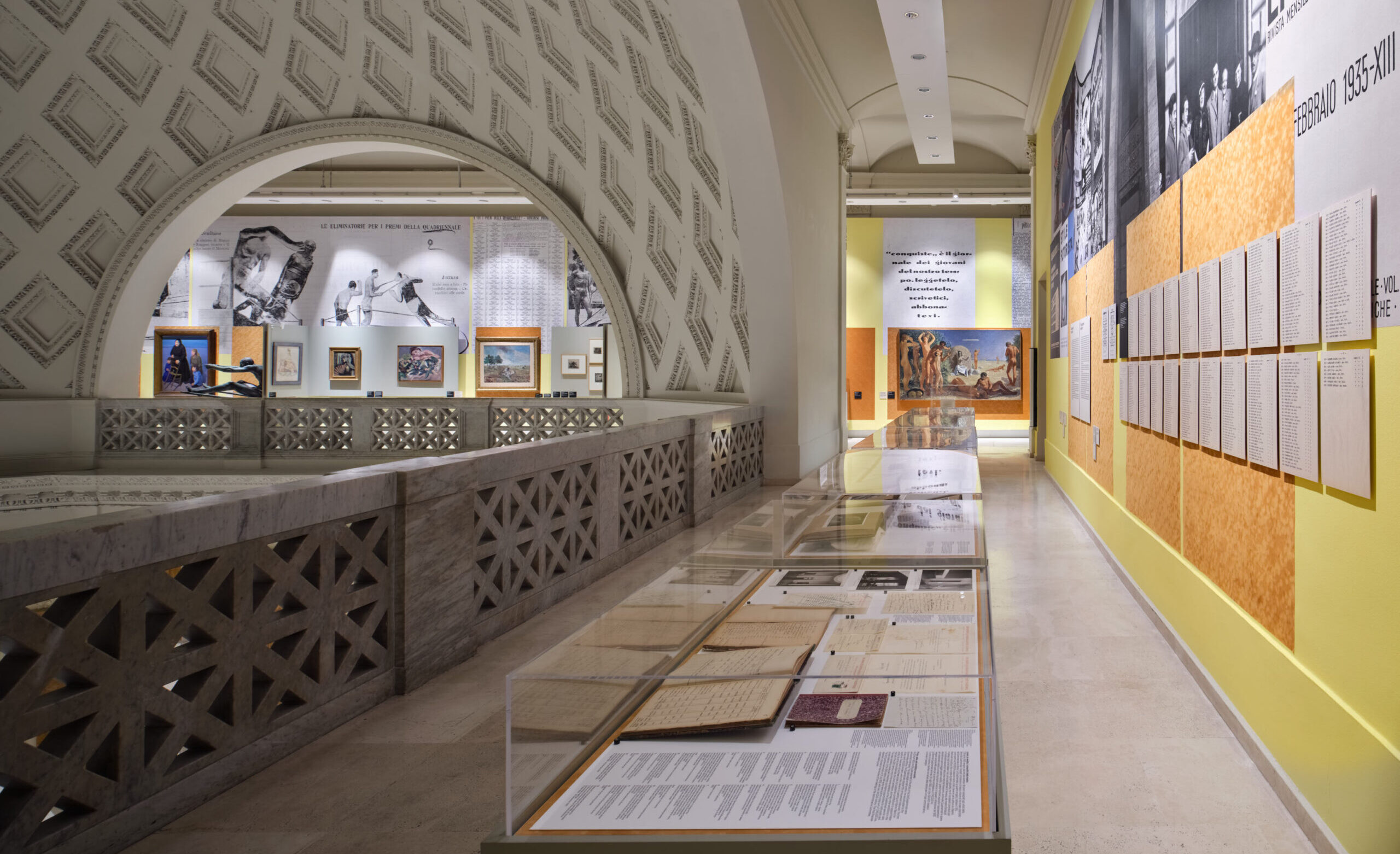
In the seven display cases currently on view, visitors can trace every phase of the 1935 exhibition’s organisation: from regulations and the minutes of the organising committee for the selection of works to the refurbishment of Palazzo delle Esposizioni and the inauguration events. Also exhibited are the lists of prizes awarded and works sold.
Following the success and enthusiastic public reception of the 1935 edition, the Quadriennale transitioned from a periodic exhibition to a public body. This transformation was formalised with the enactment of the Royal Decree-Law of 1 July 1937, presented here in its original version, preserved in the Central Archives of the State.
Woven throughout this rich documentation are letters from private archives, offering a vivid glimpse into the expectations, disappointments, conflicts, and aspirations of those who took part in that remarkable journey.
Tuesday to Thursday: 10:00 am – 8:00 pm
Friday: 10:00 am – 10:00 pm
Saturday: 10:00 am – 8:00 pm
Sunday: 10:00 am – 8:00 pm
Entrance is allowed up to one hour before closing
Closed on Monday
The ticket for I giovani e i maestri: la Quadriennale del 1935 also grants access to Fantastica.18th Quadriennale d’arte
Prices
Full price: €12.50
Reduced price: €10.00
Children aged 7–18: €6.00
Guided tours in Italian by CoopCulture: €4.00
Reduced prices for
• young people under 26 years
• adults over 65 years old
• teachers in activity on presentation of the institute of origin, excluding university professors
• groups with reservation required (min 10 – max 25 people)
• conventions
• forces of law and order and the military on producing an ID
Free Admission for
• children under 7
• 1 escort for each group booked
• 1 companion for every 10 students
• invalid and person accompanying
• tourist guides
• tour leaders
• interpreters accompanying the guides
• ICOM and ICROM card holders
• PER Card Members Palazzo Esposizioni
Groups and Schools
• From Tuesday to Friday schools € 4,00 per student
• From Tuesday to Friday groups € 10,00 per person
• Saturday Sunday and holidays groups € 12,50 per person
• Reservation required for groups € 30,00 email: edu@coopculture.it
• Compulsory booking schools € 20,00 (min 10 max 25 people) email: edu@coopculture.it
• Guided tours for groups and schools with reservation required
• Groups € 100,00 (minimum 10 — maximum 25 people) email: edu@coopculture.it
• Schools € 80,00 (minimum 10 — maximum 25 students) email: edu@coopculture.it
• SECONDARY SCHOOLS. Activities by CoopCulture
Schools: €80.00 per class group + €4.00 exhibition entry per students
School offer €70.00 for classes booking within the first month of the exhibition or taking part in two educational service activities organized by CoopCulture, email: edu@coopculture.it
Press reduced price
€ 7,00
Journalists with regular license of the National Order (professionals, pratictioners, journalists). For journalists requiring accreditment for service reasons admission is free and you need to send a request to ufficio.stampa@palaexpo.it
Member’s guest
€ 9,00
University Students, Researchers, and PhD Students (Rome universities only)
On Fridays and Saturdays, after 5:00 pm until the box office closes € 4,00
First Wednesday of the Month
Free entry for under-30s, from 2:00 PM until closing
Partner Organizations (see full list here)
• 10% discount on exhibition merchandise and catalogs purchased at the bookshop for all Ali – Associazione Lavoratori Intesa Sanpaolo members who present their ALI membership card;
• Discount on guided tours of the exhibition for all Ali – Associazione Lavoratori Intesa Sanpaolo members who present their ALI membership card;
• Reduced admission for visitors who present their current year’s admission ticket to one of the Gallerie d’Italia venues at the exhibition ticket office.